
How to Know If You've Had a Paranormal Experience: A Practical Guide
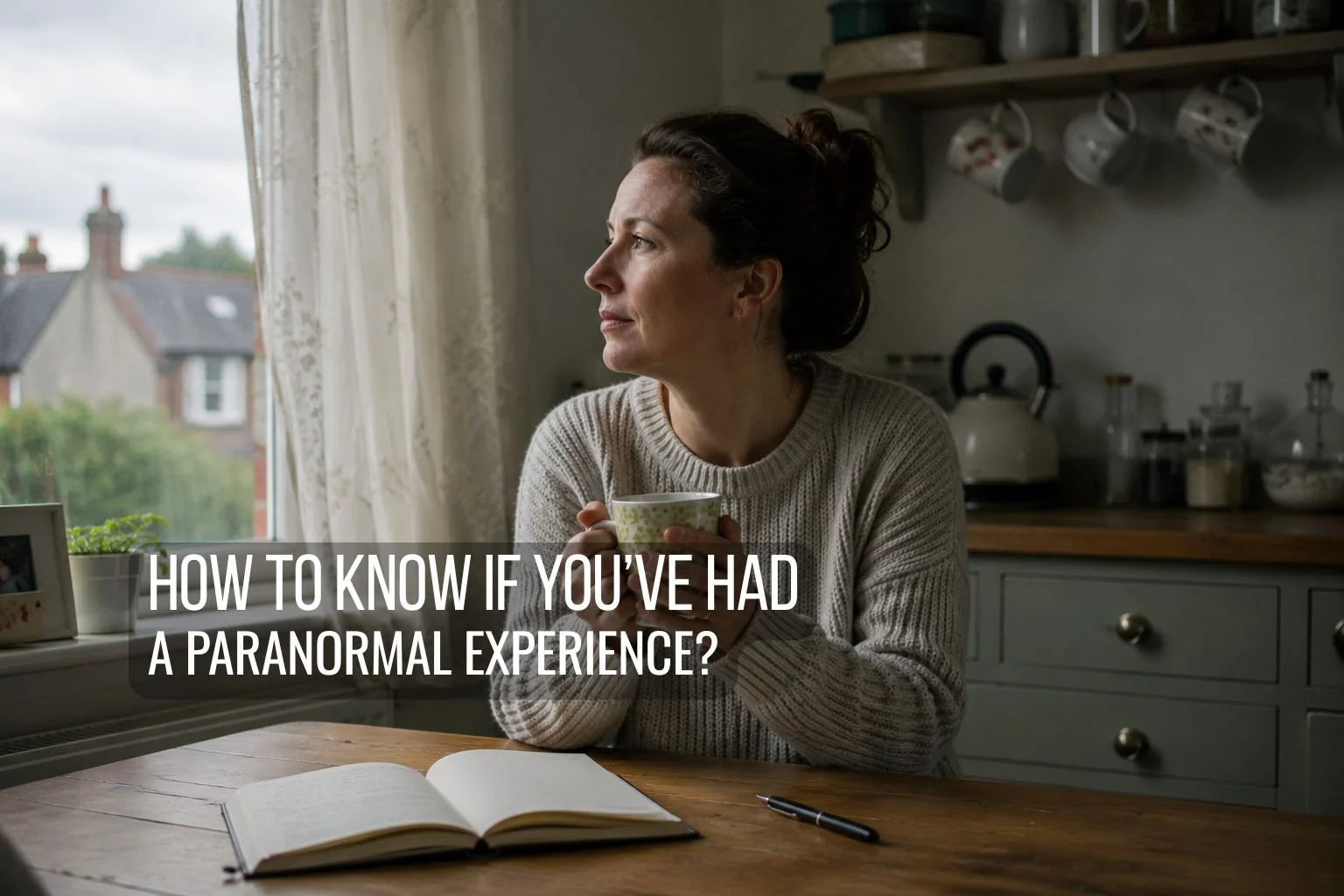
You felt something. Or saw something. Or heard something. And now, hours or days later, you are still turning it over in your head.
Most of the time when someone contacts KASE Paranormal, this is exactly where they have got to. Not certain. Not panicking. Just unable to shake the feeling that what happened was not quite ordinary, and unsure what to do with it. This guide is designed to help you work through it sensibly. We will walk you through the questions we would ask if you were sitting across from us, the ordinary causes worth ruling out first, and what tends to make us, as investigators, take an experience more seriously. The aim is not to talk you into or out of anything. It is to help you think clearly.
If you are working through something and would like a second pair of eyes on it, reach out for a free no obligation chat. You do not have to figure it out alone.
Start by Describing It Plainly
Before anything else, write down what actually happened. In your own words. As soon as you can after the event, while the detail is fresh.
Stick to what you saw, heard, felt, or smelled. Note the time, the room, who else was present, what you had been doing in the minutes beforehand, and any environmental factors such as whether the heating was on or a window was open. Avoid interpretation at this stage. "I saw a dark shape near the doorway" is more useful than "a ghost appeared in the doorway." This single step does more to clarify a paranormal experience than almost anything else we recommend. Memory drifts quickly, and the version of an event you remember a week later is often quite different from what actually happened.
Rule Out the Ordinary First
This is the work investigators do on every case, and you can do a lot of it yourself before deciding whether to take things further. Most reports we receive have an environmental explanation, and working through the ordinary causes is the single most useful filter you can apply.
Worth checking in your own home: drafts and temperature variation in older properties, plumbing noises (water hammer, expansion, air in the system), electrical issues such as loose wiring or ageing fuse boxes, settling sounds in old buildings particularly overnight as the property cools, and infrasound from traffic, weather, or appliances which can produce feelings of unease without you consciously hearing anything. If you have gas appliances, please test your carbon monoxide detector. Persistent feelings of dread, confusion, or hallucinations can be CO related, and that matters more than the paranormal question.
The brain itself is also worth allowing for. Pareidolia, the tendency to see faces or hear voices in random patterns, accounts for a great deal of what gets reported. Peripheral vision artefacts explain the majority of shadow figure sightings. Sleep paralysis and hypnagogic states produce extremely vivid hallucinations as you fall asleep or wake. Tiredness, stress, and grief all lower the threshold for sensory misinterpretation. None of this means your experience was not real to you. It means the cause might not be paranormal.
The Questions We Would Ask You
If you contacted KASE about an experience, this is what we would want to know. Asking yourself the same questions can sharpen your sense of what you are dealing with.
Was it a one-off, or has it happened before? A single incident is rarely conclusive of anything, paranormal or otherwise. What we look for is repetition, particularly in the same location, at similar times, with similar features. Patterns mean something. Isolated events almost always do not.
Was anyone else present? Independent witnesses change the picture significantly. Two people noticing the same thing, without one prompting the other, is a stronger signal than one person experiencing it alone. Multiple unrelated witnesses describing the same event over time is stronger still.
Did pets or children react? Animals respond to stimuli humans miss routinely, including sound frequencies, smells, and electrical fields. Children often describe what they perceive without filtering it through expectation. Their reactions are not proof, but they are useful data, particularly when they line up with what an adult independently noticed.
Could you replicate it? Genuine paranormal experiences tend not to recreate on demand. But if a knock or a footstep is structural, you can usually find the cause by walking through the area and triggering the conditions yourself. If you can reproduce it, it is almost certainly environmental.
Did it happen in a place with known history or activity? Older buildings, places with significant emotional history, or properties where previous occupants have reported similar things are worth flagging. Context does not prove anything, but it does inform how we approach a case.
When an Experience Is More Likely to Be Worth Investigating
After nearly two decades of casework, we have found a handful of features that tend to push an experience out of the "probably ordinary" category into something we want to look at more closely:
It has happened repeatedly, in the same location, with similar features
More than one person has experienced it, independently
Ordinary causes (electrical, structural, plumbing, drafts, sleep) have been checked and ruled out
Pets or children react consistently in the same area
The experience contains specific detail that was not previously known to the witness, such as a name, a description, or a piece of household history
It is responsive, meaning it answers a question, repeats a pattern, or reacts to something happening in the room
If most of those apply to you, it is worth taking seriously. If only one does, keep logging and see what builds.
What to Do Next
Whether your experience turns out to be ordinary, paranormal, or somewhere in the grey area, the practical steps are the same.
Keep a written log. Date, time, location, who was present, what happened, what you ruled out. A few weeks of consistent logging will tell you more about what is going on than almost anything else. Look after yourself too. Disrupted sleep, persistent stress, and isolation make any unusual experience harder to handle. If you are losing sleep over what you are noticing, address that first. Talk to people you trust. Do not Google your way into a panic at three in the morning.
If you would like a closer look at the kinds of things commonly reported, our hub piece on the most common paranormal experiences walks through them in detail. If you suspect a household pattern rather than a one-off, our guide to the different types of hauntings might help you make sense of what you are seeing. And if you would like to know what professional investigation actually involves, our guide on what investigators actually do is a calm starting point.
If You Want to Talk to Us
If at any stage you decide you would like a second pair of eyes on what you are experiencing, that is what we are here for. There is no commitment in getting in touch.
Use the contact form to describe what you have been experiencing in your own words
Request a free no obligation chat about your situation
Contact us via email or WhatsApp if you prefer a quicker first message
Find us on social media: Facebook at Kent and South East Paranormal, Instagram @KASEParanormal, X/Twitter @KASEParanormal
You can also hear the team talking through how we approach cases on The KASE Files podcast, and read more on our blog while you think things over.