
What Are Elementals? Origins, Folklore and Modern Paranormal Reports
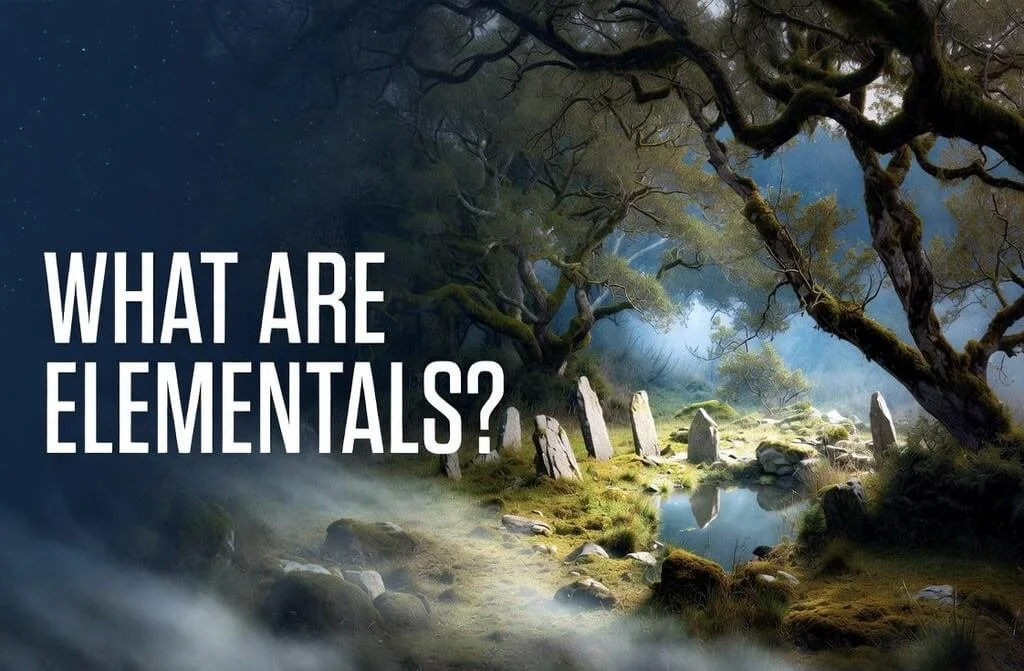
Ask five paranormal investigators what elementals are and you will usually hear a mix of answers. Some will talk about nature spirits. Others will describe non-human entities that feel older and more primal than the typical haunted house ghost. A few will be cautious about the word because it is used loosely online.
This guide explains what people mean by elementals in paranormal investigations, where the idea comes from in folklore and occult history, and how modern elemental hauntings are reported. It also sets out how KASE Paranormal approaches cases where an elemental has been suggested in a home or on private land.
Quick answer: what are elementals?
In paranormal terms, elementals are usually described as non-human presences linked to land, water, weather, trees, stone or the older folklore of a place. They are not proven beings, and the word is often used loosely, so it is best treated as a working idea rather than a confirmed explanation.
Before calling something elemental, KASE would check ordinary causes first: wildlife, neighbours, weather, building movement, underground water, electrical issues, expectations and local stories influencing how people interpret a place. If the pattern still does not fit, we look at witness accounts, location history and environmental conditions together.
What Are Elementals in Paranormal Terms?
A working definition of elementals
For the purposes of a modern paranormal investigation, an elemental is usually understood as:
A non human presence or force
Strongly linked to a natural feature or one of the classical elements (earth, air, fire, water)
Experienced as part of the land or environment rather than as a deceased person
Experiencers often describe elemental spirits as intelligent but hard to read. They may feel ancient, neutral or unpredictable rather than clearly good or evil. People might talk about “the land reacting” or the energy feeling old.
How elementals differ from a typical haunting
In a straightforward haunting, activity is often tied to a person and a story. You may have:
Reports of a figure in period clothing
Names, phrases or personal details coming through
A particular room or object that clearly matters to that spirit
With an elemental type case, the hot spot is more likely to be:
A tree line, hedgerow or patch of woodland
An old well, spring, pond or stream
A hill fort, quarry, embankment, boundary line or ruin
The house may still be affected, but the activity often feels as if it comes from outside or underneath the building rather than from its human history.
Folklore Origins of Elemental Spirits
Paracelsus and the four classical elementals
The word “elementals” first became popular in Renaissance Europe. The physician and alchemist Paracelsus wrote about beings that live within the four classical elements:
Gnomes of earth
Undines of water
Sylphs of air
Salamanders of fire
He did not describe them as human ghosts. Instead he saw them as something between physical creatures and spirits, tied to their own environment and usually invisible to us.
Later occultists and Victorian writers borrowed this model. Over time, elemental spirits became a convenient label for non-human entities linked to earth, air, fire and water, and this language filtered into modern paranormal thinking.
Nature spirits, fairies and land guardians
Long before Paracelsus, folk traditions across the British Isles and Europe already treated the natural world as alive and inhabited. People spoke of:
Spirits in rivers, wells and springs
Presences in trees, groves and hills
Guardians of certain stones, mounds and crossroads
Offerings were left in some places, and others were avoided completely because they were thought to “belong” to something else.
Modern spiritual writers often use “elemental spirits” as an umbrella term for:
Nature spirits that seem to maintain or guard a place
Beings associated with trees, mists, water, storms and wild landscapes
Presences that do not behave like human ghosts at all
In this blended view, elementals draw on both occult theory and local folklore about land spirits and fairies.
Modern Types of Elemental Spirits Reported Today
Earth aligned elementals
Earth aligned elementals are linked with soil, stone and living ground. People often report them around:
Woods, copses and tree lines
Old walls, hill forts, ruins, banks and foundations
Graveyards and ancient earthworks
Typical reports include a strong feeling of being watched in one particular spot, or sudden unease at a specific gate, path or corner of a garden.
Some spiritual traditions see these elemental spirits as guardians of the land that react sharply to heavy disturbance or disrespect.
Water aligned elementals
Water aligned beings are connected with rivers, streams, wells, ponds, marshes and the sea. Witnesses might describe:
Voices, crying or singing near water when no one is visible
Apparitions or light phenomena along a riverbank or shoreline
Repeated dreams of a presence in a particular body of water
Older language calls these undines, water spirits or simply “something in the water”.
Air aligned elementals
Air aligned elementals are associated with wind, height, storms and mists. Reports often involve:
Sudden swirling gusts in otherwise still rooms
Whispers, bell sounds or fragments of words carried on the wind
Shapes, shadows or faces showing up mid air
People who work with these elementals spiritually often link them with thought, communication and inspiration, as well as unsettling atmospheric effects.
Fire aligned elementals
Fire aligned beings are linked with flame, heat and rapid change. Modern accounts may include:
Candle flames or open fires behaving oddly without a clear physical cause
Repeated small electrical faults or spikes in one room or around one person
Localised feelings of intense heat or “burning” sensations on the skin without a medical explanation
Paracelsus referred to these as salamanders. In paranormal language, they are sometimes associated with volatile, disruptive phenomena.
Elementals in Modern Paranormal Investigations
Patterns in modern elemental haunting reports
Cases that people label as elemental often follow similar patterns:
The activity seems tied to features of the land rather than décor or furniture
There is a clear hot spot or focal point rather than random events across the whole property
The presence feels non human, animal like, or “other” rather than like a person
When anything is seen, it may be a vague mass, a distorted figure, an animal or child-like form rather than a recognisable human apparition.
Playful and curious elemental activity
It is worth saying that not all elemental-style reports are heavy or oppressive. Some witnesses describe activity that feels curious or even playful.
Examples people talk about include:
Light touches on hands or sleeves when the mood is relaxed
Small, precise taps on request during calling out
Motion sensors and simple trigger objects reacting when investigators treat the space with warmth rather than confrontation
At KASE Paranormal we have seen this mix of tones in several locations. Slough Fort is a good example: one particular area of the fort regularly produces more serious moments alongside what feels like light-hearted, responsive activity that has the team chasing the energy, producing ‘cat and mouse’ like behaviour.
If you would like to see how we document that balance of unsettling and playful interactions in practice, you can read our Slough Fort investigation case study on the blog and compare it with this elemental guide when you are finished with the article.
Environmental and emotional clues
Witnesses sometimes report:
Localised smells of earth, bog, sulphur or rot that appear and vanish
Heavy dread, panic or pressure in the head that lifts once they leave a certain spot
Sudden temperature drops or rises that do not match heating, windows or obvious draughts
None of this is proof on its own. Many physical and psychological factors can cause similar sensations. In a careful elemental paranormal investigation, these clues are simply part of a bigger picture that includes baseline readings and practical checks.
How often is it really an elemental spirit?
In practice, many “elemental paranormal” cases turn out to have more ordinary explanations once a team looks at them properly. These can include:
Wildlife, roots, watercourses, drainage, subsidence and other land issues
Mould, low frequency sound, poor air quality and lighting effects
Human spirits that make sense in light of the property’s history
A cautious investigator treats “we think it is an elemental” as a theory, not a final verdict. The job is to gather evidence, rule out normal causes and only then consider whether the elemental label still fits.
Elementals vs Ghosts, Demons and Other Entities
Non human, not automatically “demonic”
People sometimes reach for the word elemental because they do not like saying “demon” but want to convey that something feels heavy or hostile. It helps to keep the labels clear.
In broad paranormal language:
Ghosts are usually understood as the spirits or imprints of people or animals
Demonic entities have never had a human form. They are seen as hostile and morally driven, but require human permission under God’s law (in religious frameworks)
Elemental spirits are non human presences linked to nature and the elements, which may be harmful, neutral or occasionally helpful
These are human attempts to map unknown experiences. Even so, making this distinction can stop frightened homeowners assuming the worst.
Why the label matters for frightened homeowners
When someone believes they are dealing with something evil or demonic, fear tends to spiral. Sleep suffers, tempers fray and everyday stress starts to look like part of the haunting.
Using the elemental label carefully, if it fits, can:
Acknowledge that the presence feels non human and intense
Avoid pushing the situation into horror film territory
Keep the focus on calm observation and practical steps
This is not about downplaying anyone’s distress. It is about keeping control of the narrative so that the household does not feel overwhelmed.
Could Something on Your Land Be Elemental in Nature?
Calm checks you can do yourself
If you suspect some kind of elemental haunting around your home or land, there are sensible steps you can take before calling in a team:
Walk the property in daylight and mark exactly where you feel uneasy
Look for drainage problems, animal paths, standing water, damaged trees and obvious hazards
Keep a simple written log of what happens, where, when and who was present
Reviewing this log helps you spot patterns. It may highlight one specific natural feature that everything clusters around, or reveal that some events have ordinary causes you can fix quickly.
When it may be worth contacting a paranormal investigation team
It can be worth contacting a private paranormal investigation team when:
You have checked basic causes and still feel unsettled
More than one person has experienced similar phenomena
The activity is affecting sleep, health, relationships or your willingness to use parts of the home or land
A responsible team will listen to your account, ask straightforward questions and explain what they can realistically offer, instead of jumping straight to dramatic language.
How KASE Paranormal Investigates Possible Elemental Cases
KASE Paranormal is a private, members only investigation team based in Kent and working across the South East. The focus is on careful, respectful paranormal investigations rather than public ghost hunts.
Step one – listen and observe
If you contact KASE about a possible elemental, the first step is always a detailed conversation. You will be invited to describe:
What has been happening and for how long
How it affects you and anyone else in the household
What you have already tried, both practically and spiritually
If a visit is appropriate and you are comfortable with it, a small team will walk the property with you, paying attention to both the building and the surrounding land.
Building a picture of the land and environment
During an elemental paranormal investigation, KASE will look at:
Natural features such as trees, banks, watercourses and changes in ground level
Old boundaries, outbuildings, wells and foundations
Local history and folklore that might relate to the site
Baseline environmental readings are taken and controlled tests are carried out to rule out ordinary causes as far as possible. Only once this groundwork is done does the team begin to form an opinion about what may be happening.
Keeping the focus on your wellbeing
Whatever label is used in the end, KASE’s priority is your wellbeing and your sense of ownership over your space. That can include:
Offering calm, practical suggestions that you can continue after the visit
Being honest about what is not known, rather than forcing a dramatic narrative
Respecting your beliefs, privacy and boundaries at every stage
If elemental spirits exist in the way many traditions suggest, they are not something to poke at for entertainment. They are also not an automatic reason to panic. The aim is to approach the situation with respect, clear heads and good evidence.
Elementals – Key Questions Answered
Can elementals haunt a house?
Most reports of elemental spirits involve land and natural features, but houses built on or next to those features can be affected. In practice, people experience elemental activity in certain rooms, hallways or attics that sit over a key line, bank or watercourse.
Are elementals dangerous?
Elementals are usually described as non-human and uninterested in human morals. That does not make them harmless, but it does mean they are not automatically “evil”. The real risk comes from fear, stress and unsafe behaviour in response, which is why a calm, structured investigation is important.
Can you get rid of an elemental?
There is no single guaranteed method. In some cases, practical changes to the land or building, combined with firm boundaries and respectful behaviour, seem to reduce activity over time. In other situations, the goal is less about “banishing” and more about learning to live comfortably with a place that has a strong presence.
A good team will not promise instant fixes, but will help you understand what is happening and suggest realistic next steps.
Final Thoughts
Elementals sit at the crossroads of folklore, nature and modern paranormal investigation. They reflect an old intuition that the land itself can feel alive, and that not every presence we meet was once human.
For KASE Paranormal, the word “elementals” is a careful working term for certain non-human, land focused cases, not a catchphrase. If something on your property does not feel right, you do not need perfect terminology. Notice it, record it and look after yourself and the people you live with. From there, a grounded, respectful investigation can help you decide what to do next.
Thinking About A Paranormal Investigation In Kent Or The South East?
You do not need dramatic, TV style evidence to ask for help. Many conversations start with something simple, and in the context of elementals and nature-linked hauntings, it might be as ordinary as:
|| “The house feels fine, but there is one part of the garden or land that just feels wrong and I cannot relax there.”
A structured paranormal investigation can help when:
You have done basic checks and things still do not feel right.
Multiple people have had similar experiences in the same rooms.
The activity affects sleep, routine, or your willingness to use certain parts of the house.
You want a neutral, respectful team to look at the situation with fresh eyes.
KASE Paranormal offers home paranormal investigations across Kent and the wider South East. You can read more about how that works here: https://www.kaseparanormal.co.uk/private-investigations
If you would like to reach out, you can:
A short contact form where you can outline what you are experiencing in your own words: https://www.kaseparanormal.co.uk/contact-us
An option to book a free chat about what you are experiencing. You can request this directly in the contact form.
Reach us via email: info@kaseparanormal.co.uk
Find us on social media:
You can also browse other articles on our blog if you want to read more while you decide what to do next: https://www.kaseparanormal.co.uk/blog
Whether your house, business or land turns out to be haunted, quirky, or simply in need of a few repairs, you deserve to feel safe and settled in your own space. If something does not feel right, it is completely reasonable to ask for help.